On September 26, I sat in a room and heard my screenplay, Forgive & Forget, read aloud for the first time by twelve actors. I expected to hear my words. I didn't expect to hear something I hadn't written.
Greg, the actor playing Garret, read him with a Trinidadian accent. That's not how I heard Garret in my head. For a moment, I wasn't sure what to make of it. Then Garret and Loretta had their first exchange, and I stopped wondering. The accent worked. More than that, it brought out who Garret is.
It also deepened something I had written but never fully heard. Loretta rejects Caribbean culture, denies her own, and yet she married a Trinidadian man. On the page, that contradiction is a fact about her. Out loud, in the same room with the two of them, it became something you could feel. Contradictions are central to my film. How do we find forgiveness and hold someone accountable for their actions when they don't remember what they did wrong?
The entire cast delivered powerful performances, and we had a three-hour moderated discussion afterward to share feedback and talk through the film's major themes.
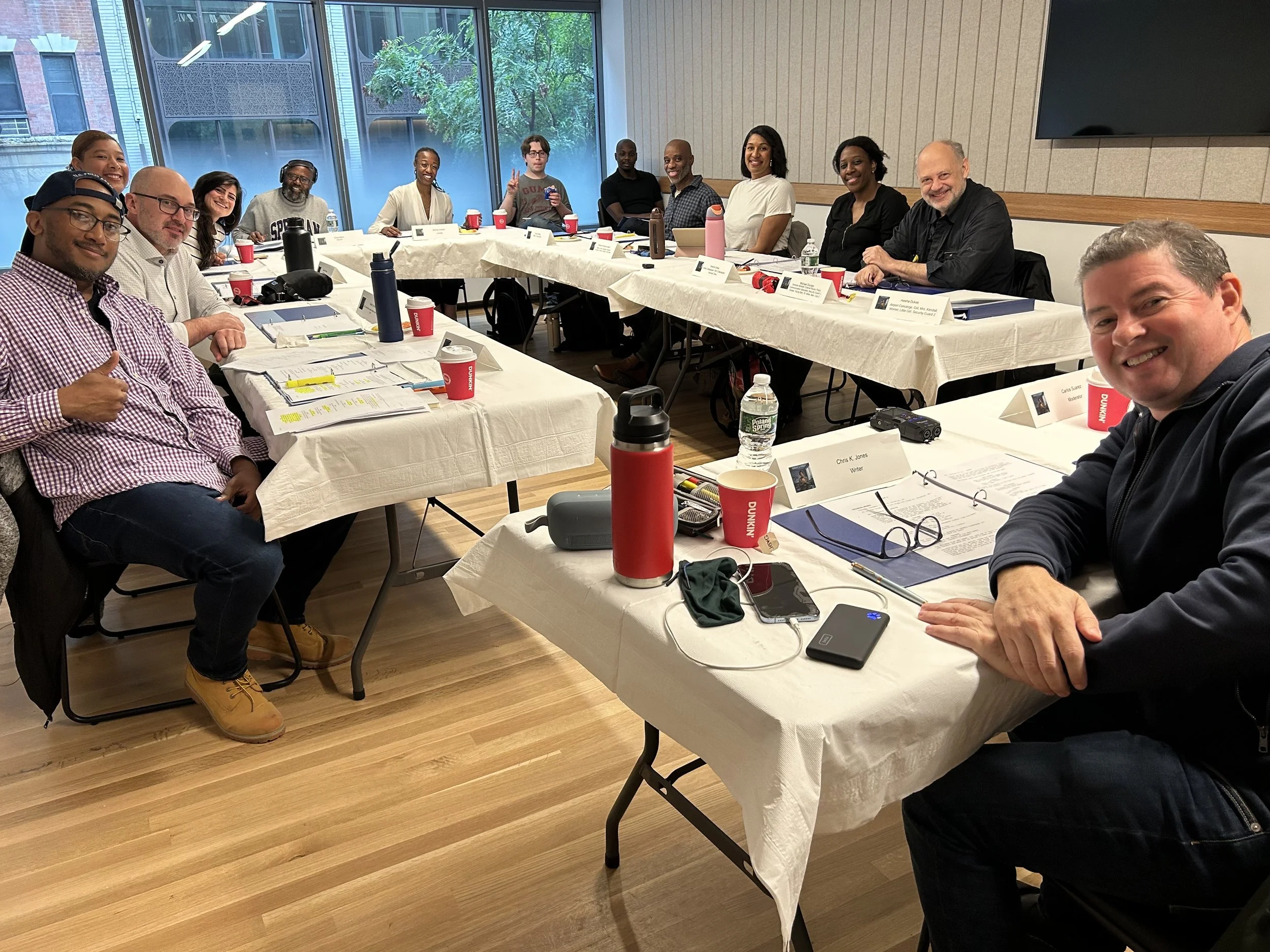
So, why go to all the expense and trouble of finding space (thank you, 92nd Street Y) and people to read? I've read my work aloud myself. I've asked friends to read sections for me, and it helps. But it isn't the same, and the best comparison I have comes from baseball. You don't ask the catcher to play second base. Yes, he can catch and throw, but it's a different position. Friends can read the words. The ROI is finding actors who commit to a character and bring the person inside the dialogue to life, including parts the writer didn't know existed.
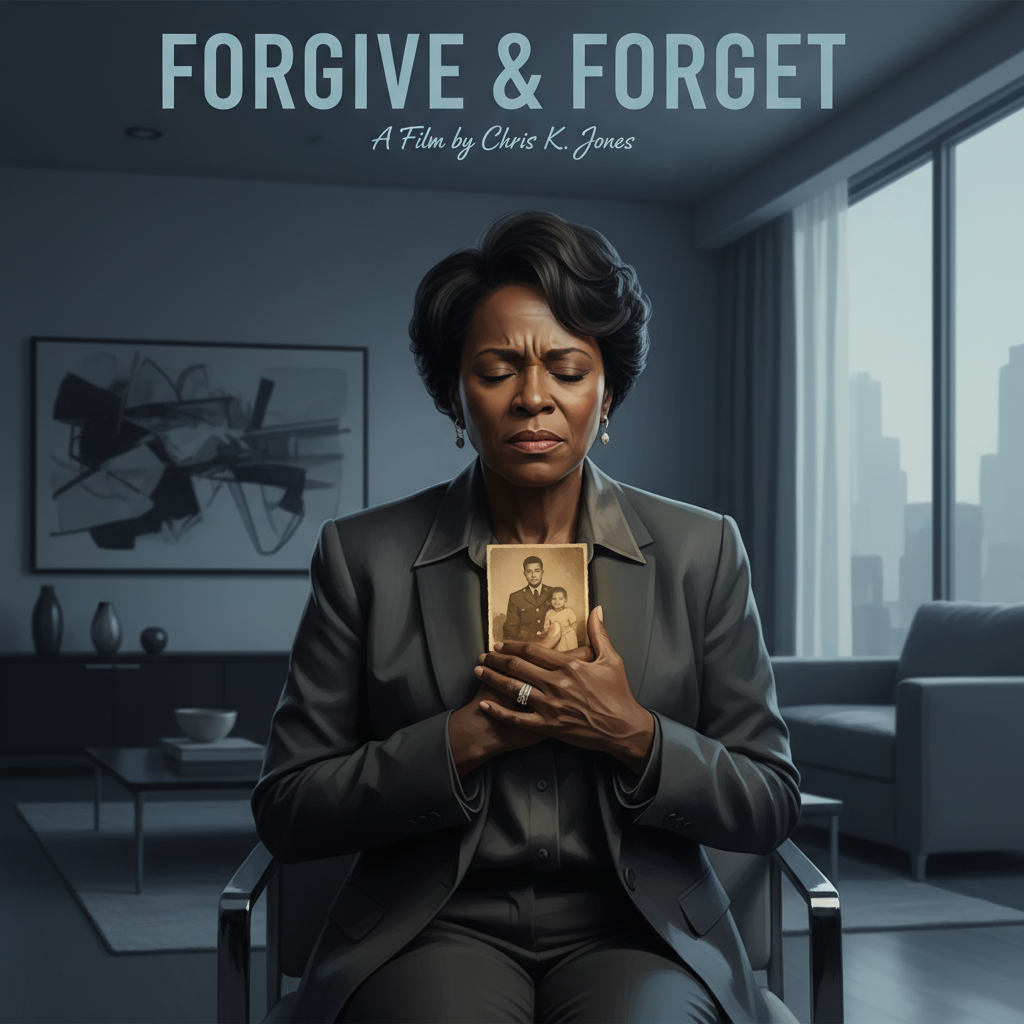
Forgive & forget Film Poster
The reading also changed something I'm about to fix. In one scene, Loretta complains Garret is listening to Soca music and asks him why. Sitting there, I realized the exchange was working as a setup, a way to tell the audience how she feels about Caribbean culture. But that can't be the first time she's said it. So after she asks, Garret's answer is going to tell us he has been giving her the same answer for twenty years, and she will respond with an eye roll. What was an explanation now becomes history, and you learn about a marriage instead of being told about a character.
The reading mostly confirmed what I had built. But I found two things I could only have found by listening to someone else give my characters a voice. As writers, we carry one version of our people in our heads. A great actor can show us another version, sometimes a truer one.
I'm grateful to those actors for what they gave the story that day, and I'm still thinking about Greg's Garret.