Present Sacrifices for Future Benefits
Happy Autumnal Equinox, my friends. Thirty-seven years ago today was my first day at Northumbria University as an exchange student — Newcastle Polytechnic, as it was known then. I'd just finished a whirlwind tour of Europe, 18 cities in 22 days, and I was exhausted and just wanted to put my bags down somewhere. I found that somewhere: 812A Gibbs Hall.
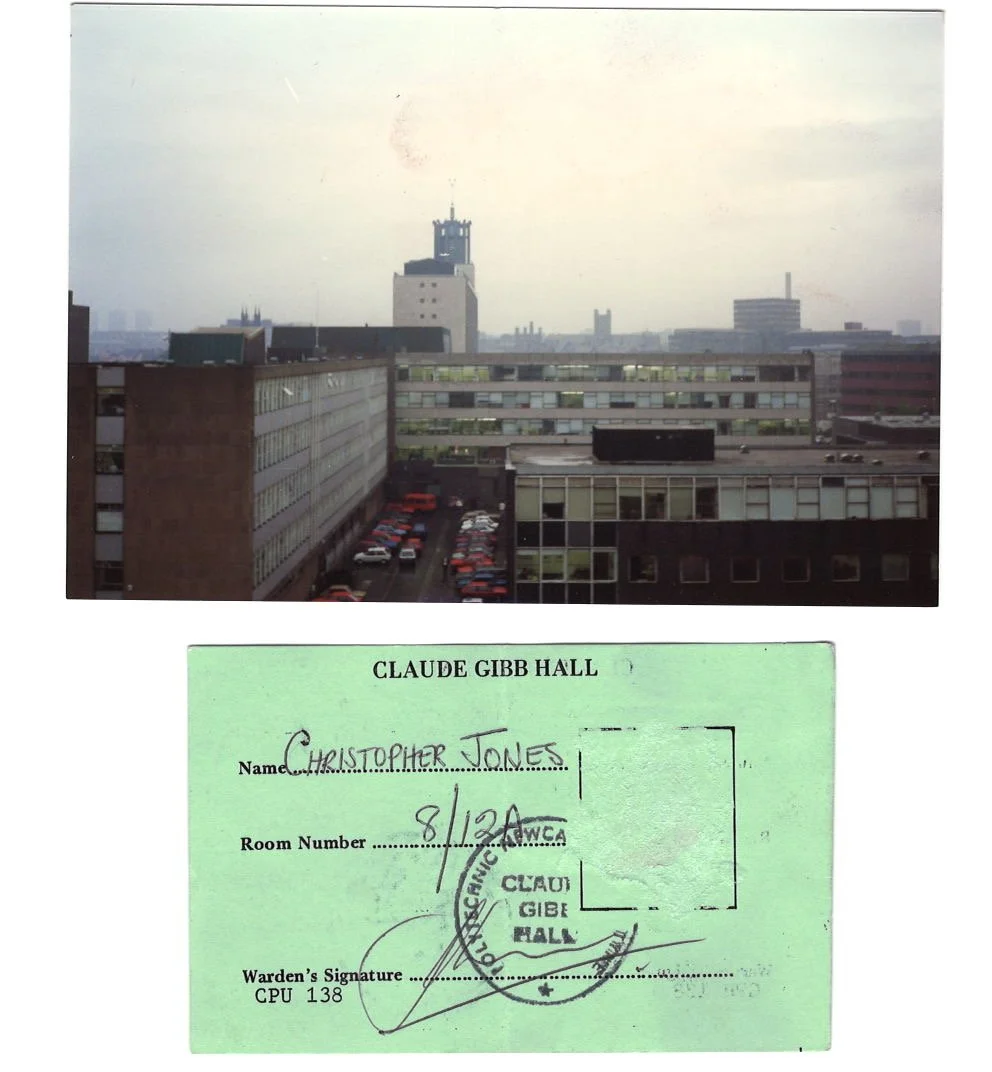
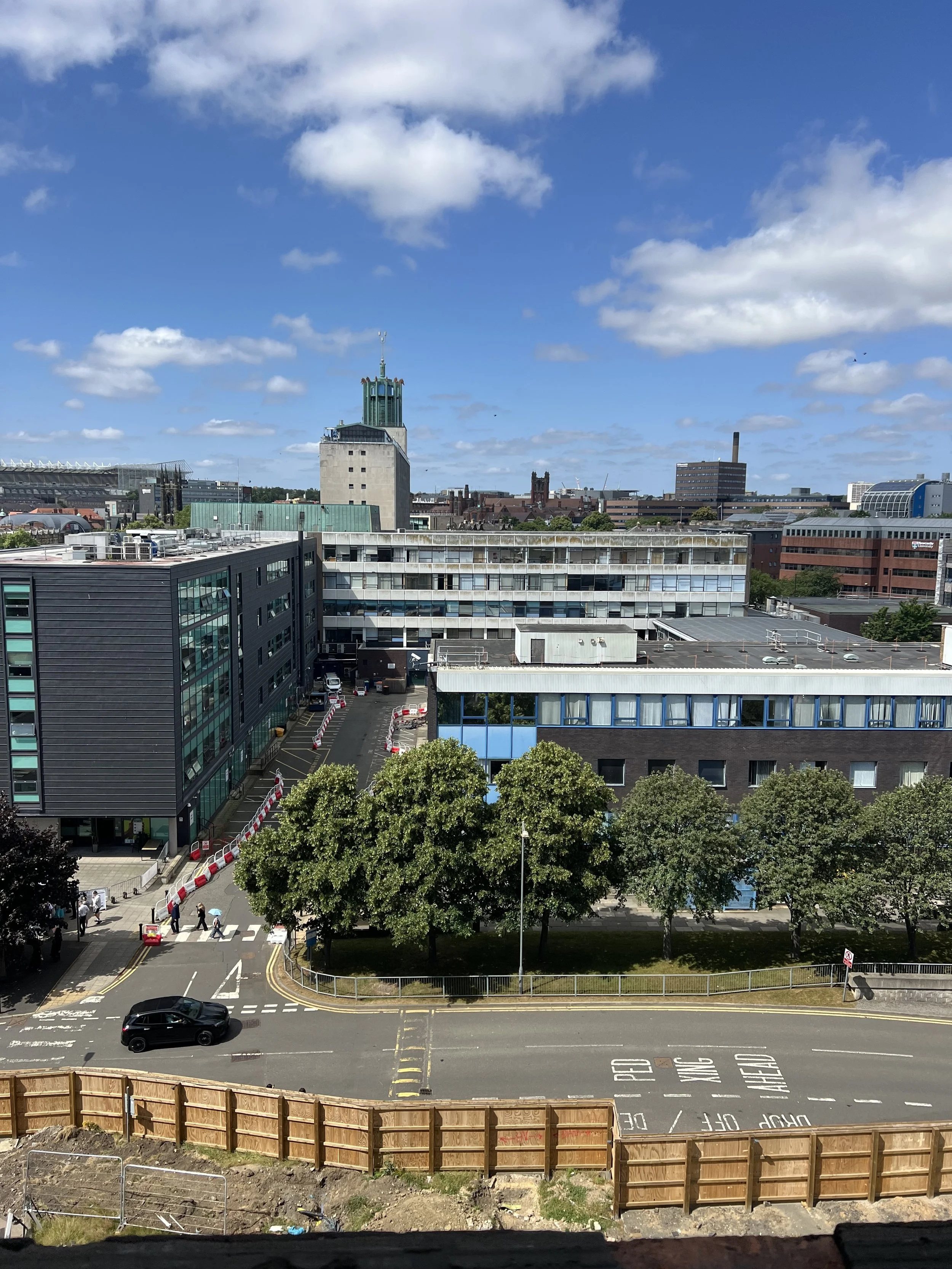
Views from Claude Gibb Hall Room 812A in 1989 (left) and from July 2026, they are tearing the building down.
Getting there wasn't the hard part. Earning the right to go was. I signed up and never wavered — from that moment it was a relentless pursuit, and I was prepared to make whatever sacrifices it took. That summer of 1989, while my friends partied at the Jersey Shore, I worked seven days a week, 12 to 14 hours a day, as the youngest accountant on environmental disaster sites. I kept one image in my head through all of it: a chain of dollar bills stretching across the Atlantic, New Jersey to Newcastle.
Present sacrifices for future benefits,
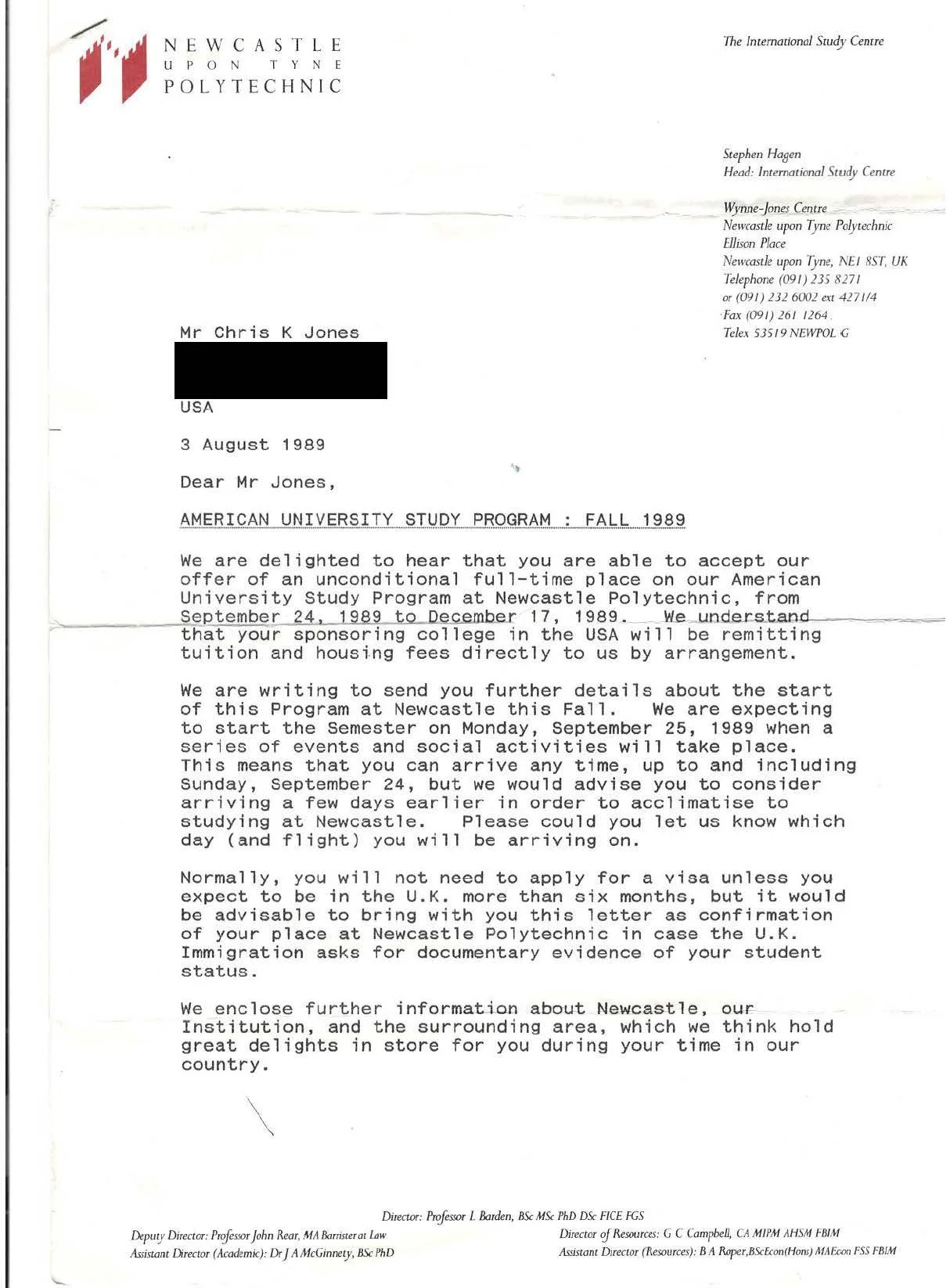
My acceptance letter to Newcastle Polytechnic, now named Northumbria University
I repeated my mantra, over and over, until it became a fact about how I live. It's still the truest thing I know about how I've built anything — the businesses, the scholarships, the second act as a writer. And Northumbria is where I first proved it to myself.
I'd struggled badly at my university in New Jersey — studied hard, knew the material, and still barely passed. My accounting department eventually dismissed me from the program. I spent a long time believing that meant something about me. Then I got to Northumbria, where the coursework was papers and presentations instead of exams, and I posted the highest marks of my academic career. Nothing about what I knew had changed.
Only how I was asked to show it.
Northumbria didn't teach me I was smart. It taught me I'd been demonstrating my knowledge differently than most people all along, and that difference wasn't a defect — it just needed the right room. I've been three times CFO of the Year since. I still don't have an accounting degree.
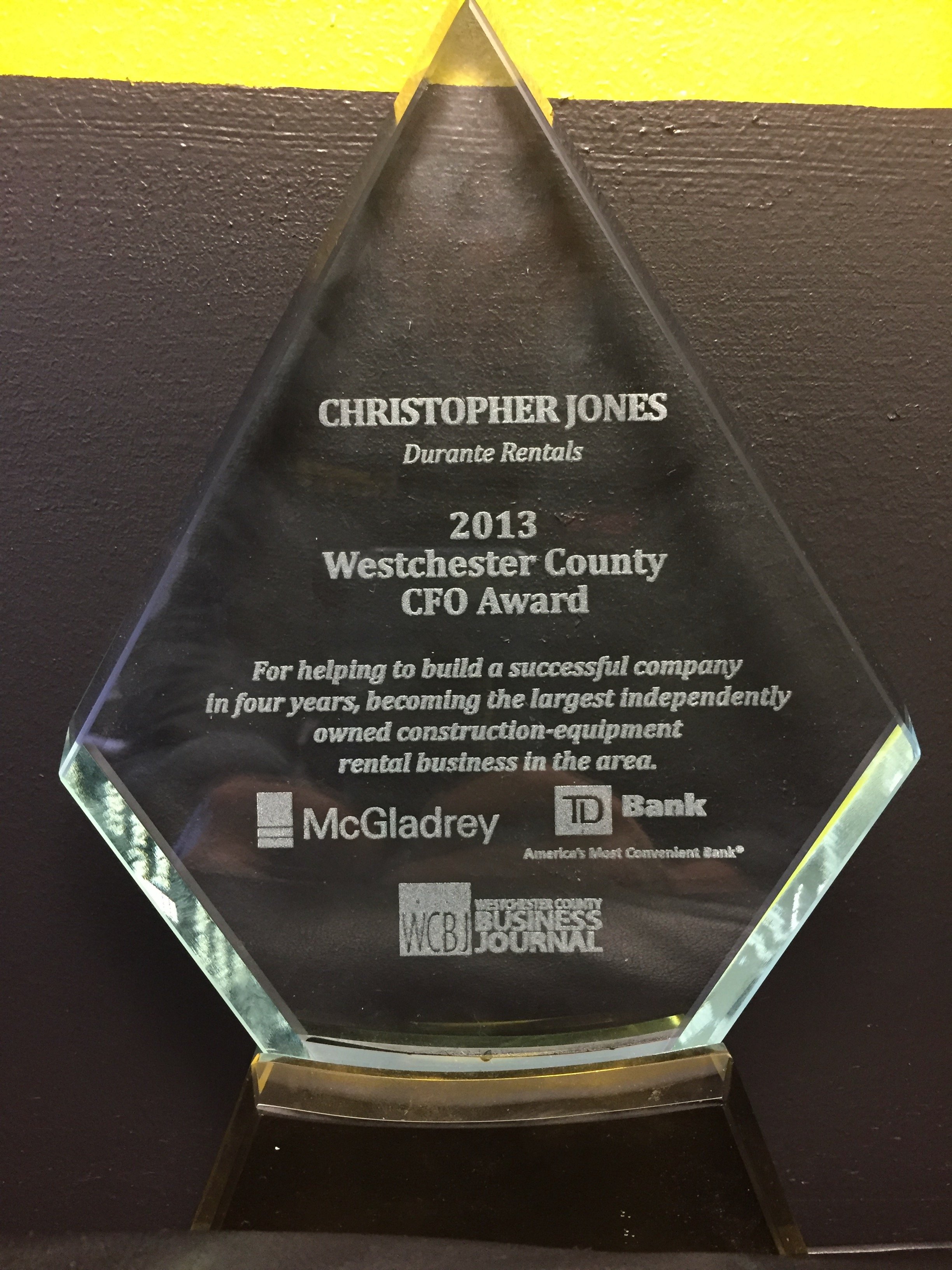
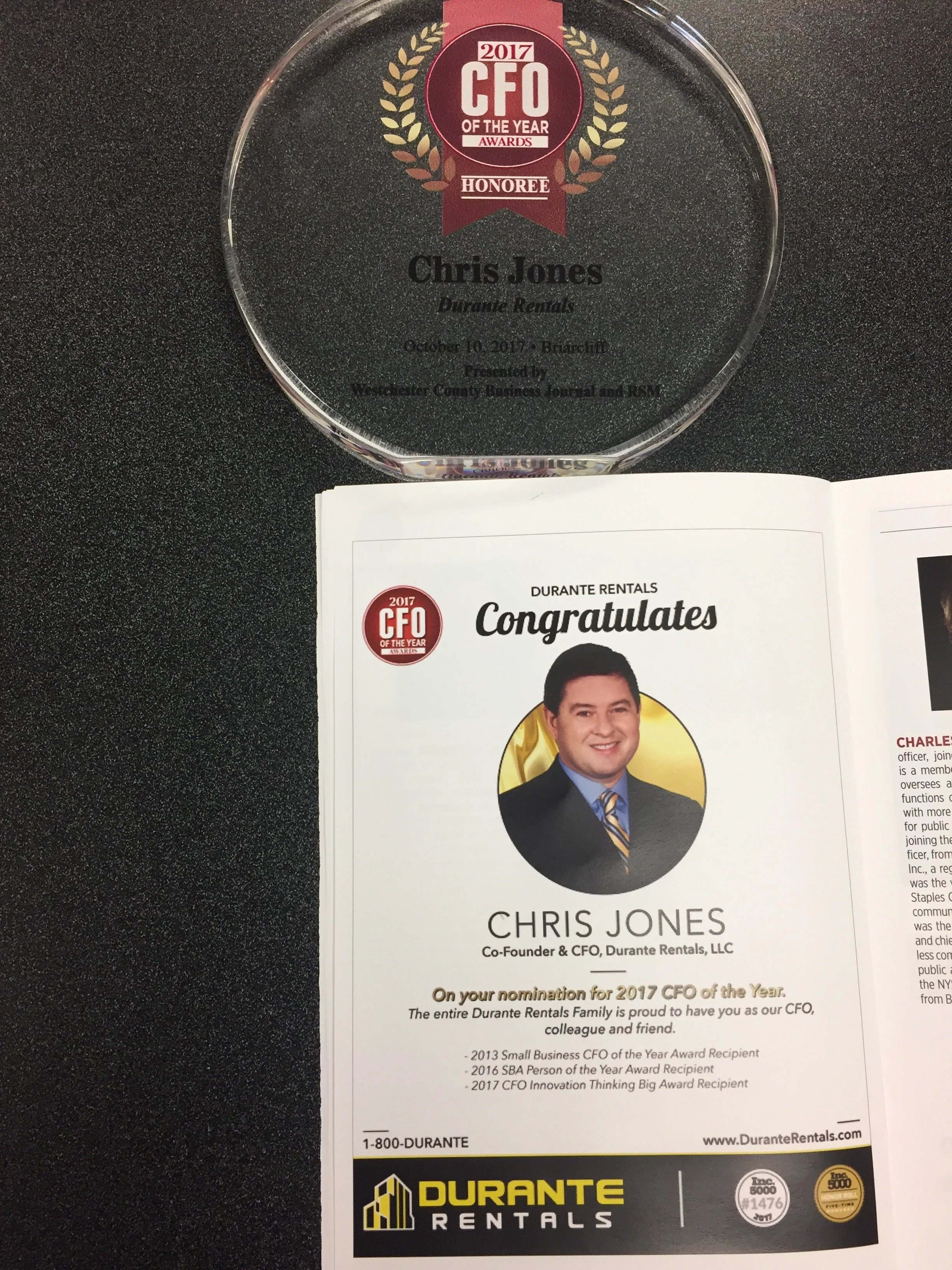
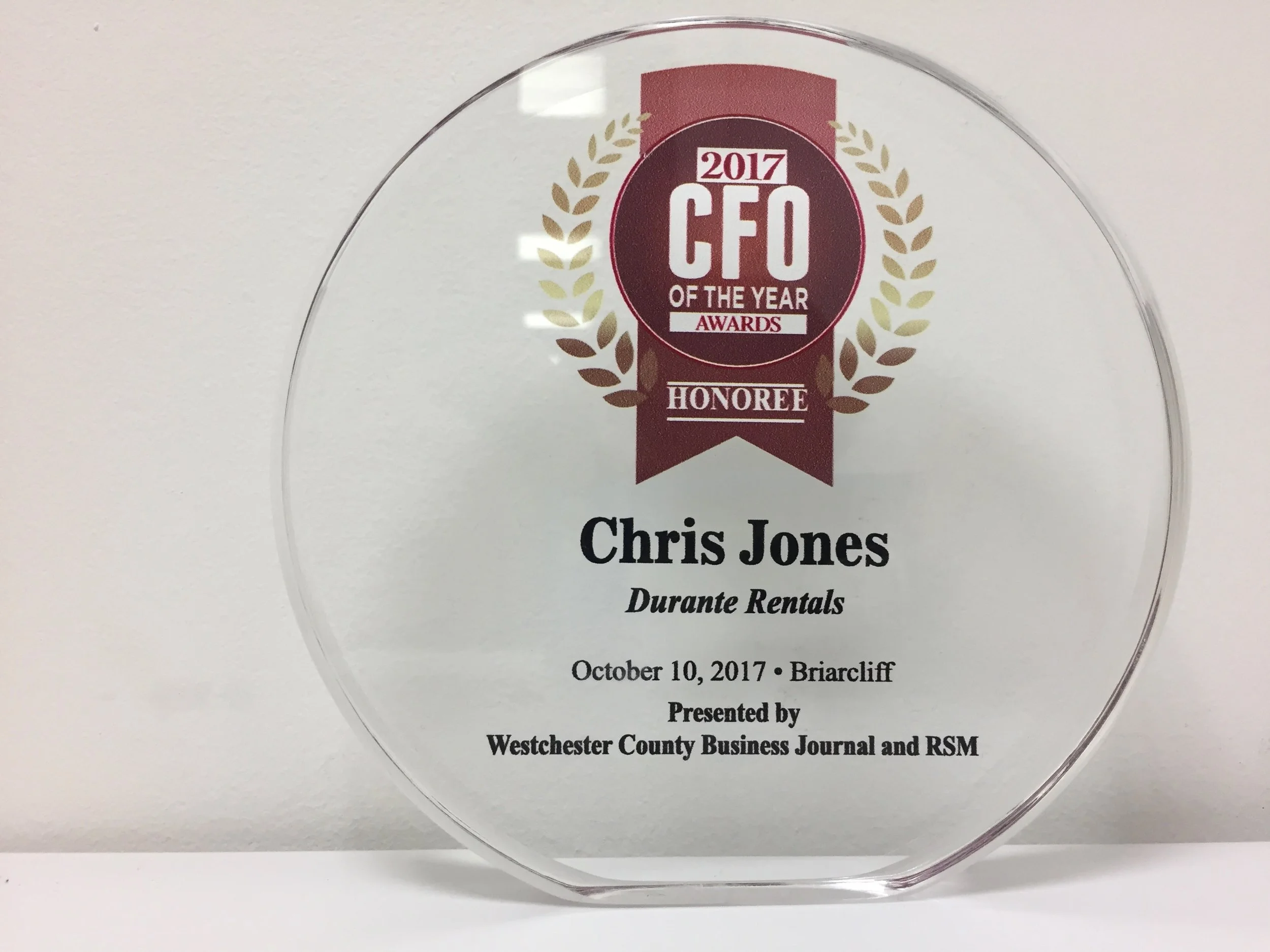
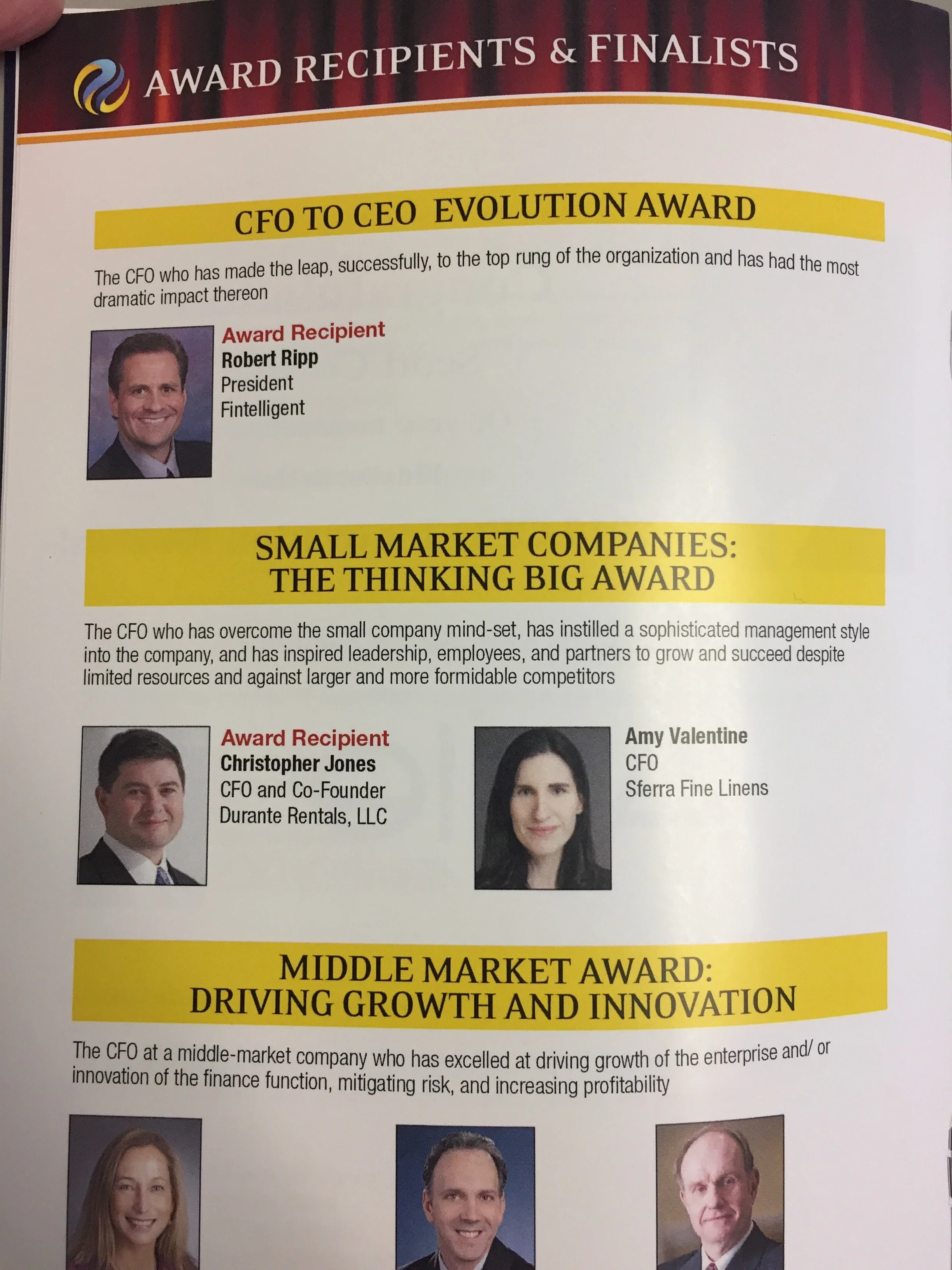
I also found out, in that same room, that I could speak. The first time I stood up to defend my group's position to a class of British students who pressed hard — but fairly — to see if "the Yank" actually knew what he was talking about, I discovered a numbers story could hold a room just as well as a headline. I found football there too — the real one — and fell for it the way you only can when you're surrounded by people who've loved it their whole lives. And late at night, instead of sleeping, I watched BBC tapes of the Royal Shakespeare Company and wrote a continuation of Macbeth, in Elizabethan English, picking up the thread that Banquo's sons would be kings. Nobody assigned that.
I just wanted to know if I could.
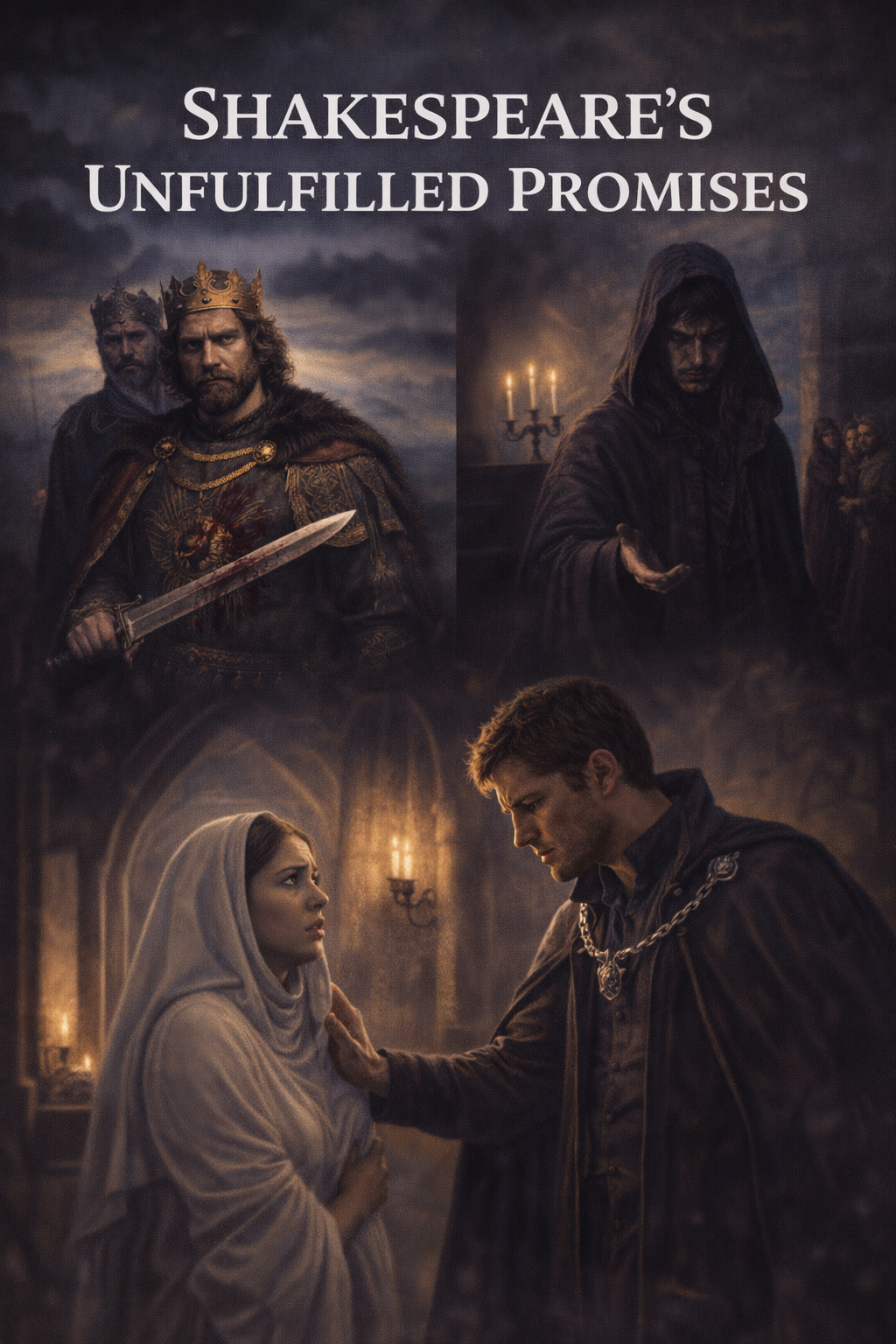
Banquos Sons Would Be Kings, Malovio’s Revenge, and Isabella’s Promise
That's the part of "present sacrifices for future benefits" nobody tells you: the return doesn't always come back to you in the shape you expect, or from the person you expect it from.
The benefit I can point to, decades later, is this: through my charitable trust and Think Strong Ventures, I've put more than $300,000 into scholarships and support for students in the UK, the US, and Barbados — including two at Northumbria, the Chris K Jones Creative Writing Scholarship and the Chris K Jones Entrepreneurs' Scholarship, with one seat reserved for a woman entrepreneur, because I believe that matters. Together they've supported 20 students so far. Nobody sacrificed a summer of 14-hour days for me.
Instead, I got to be that dollar-bill bridge for someone else.
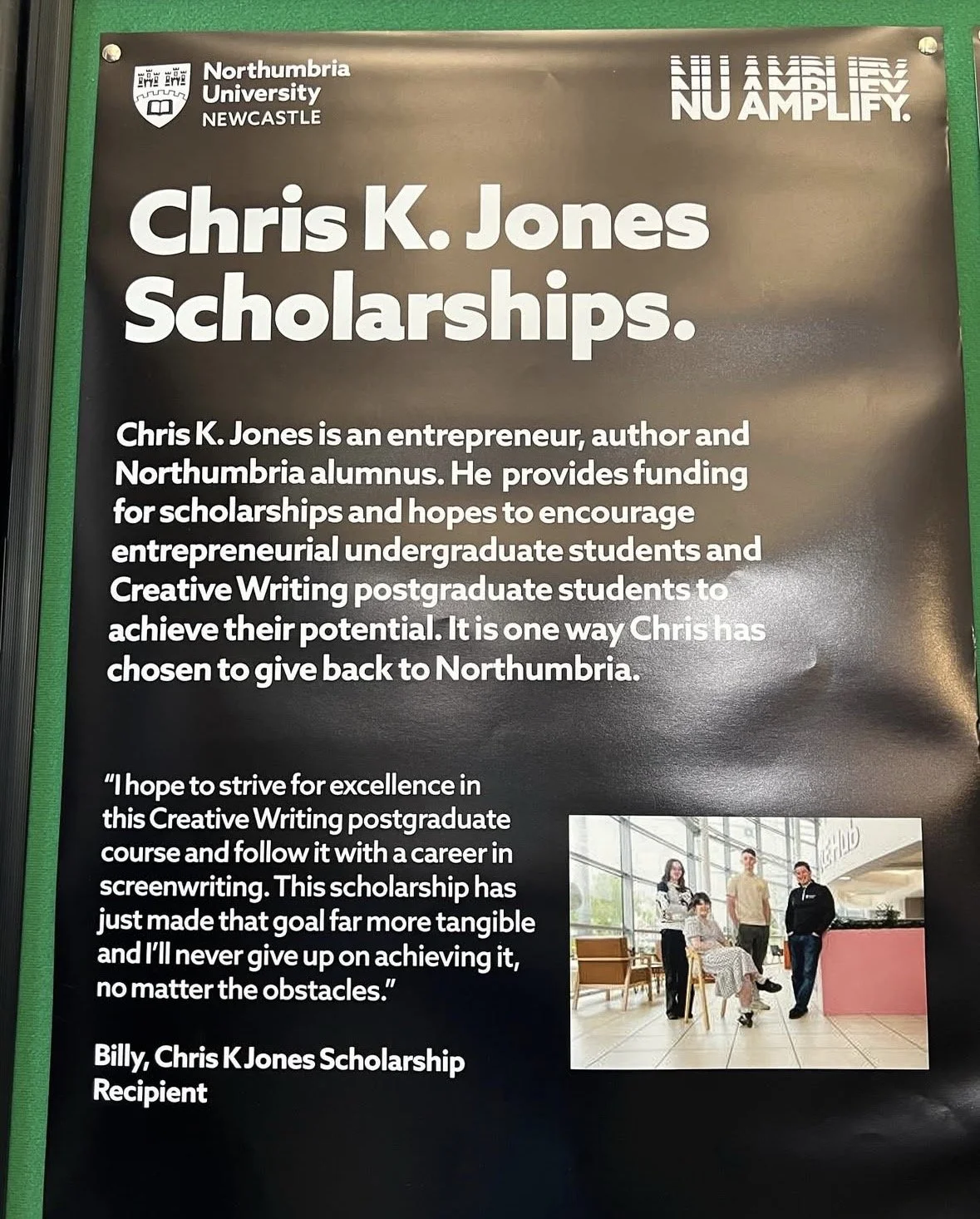
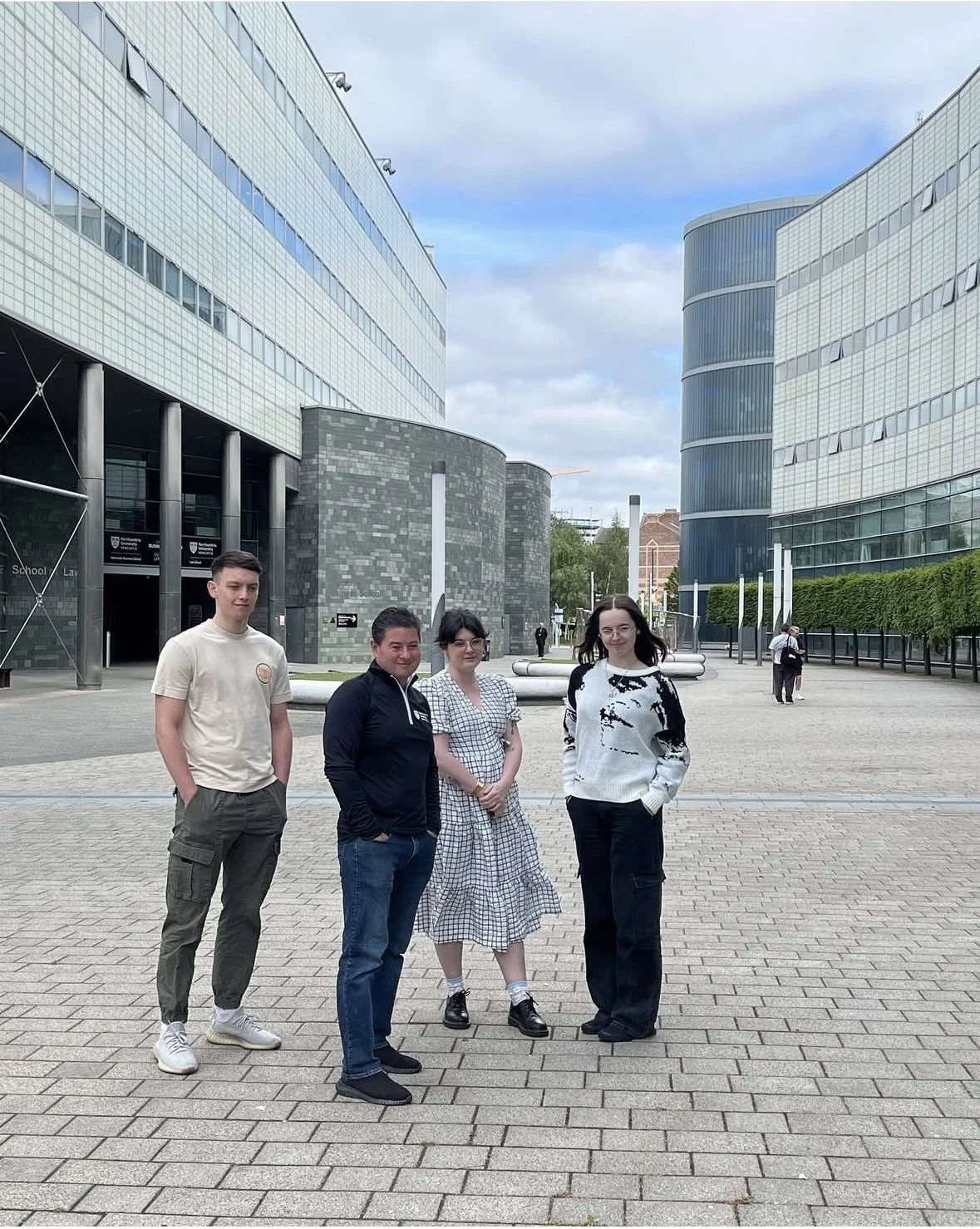
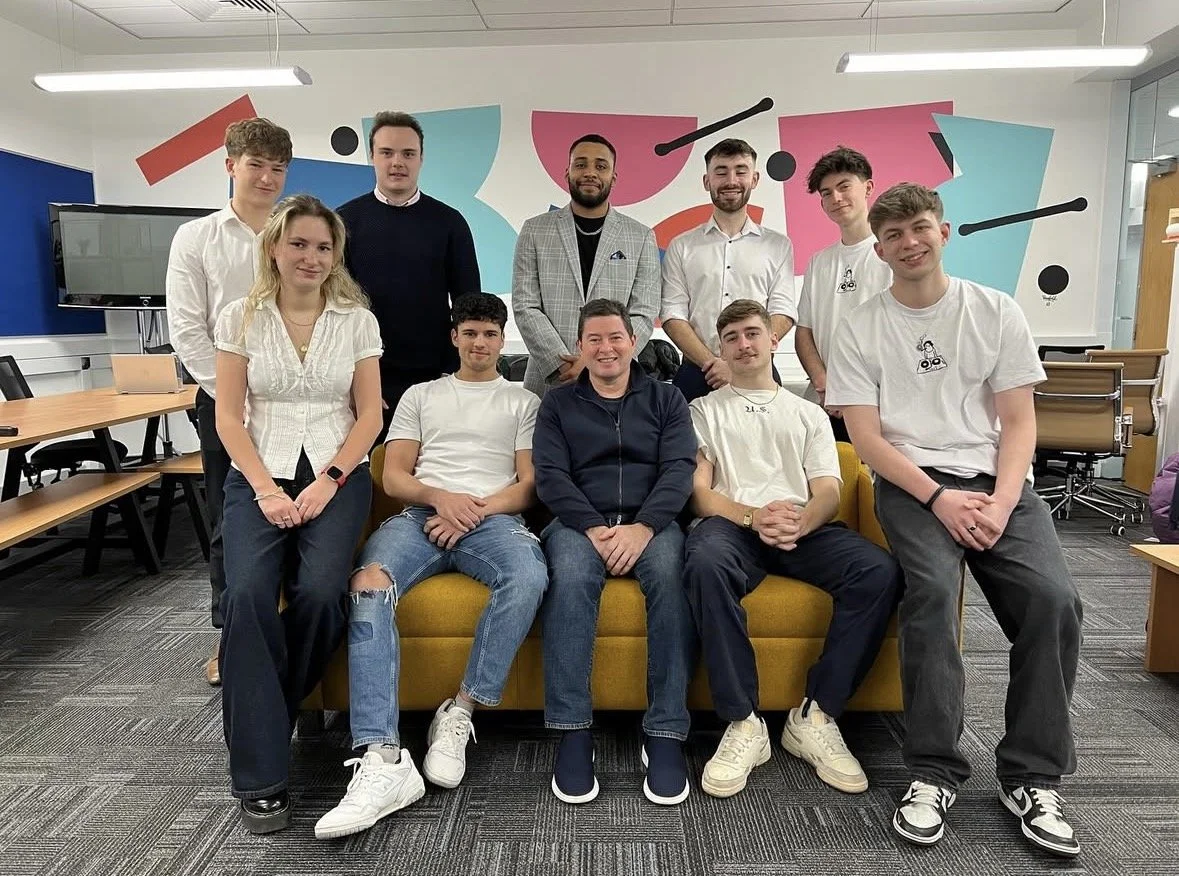
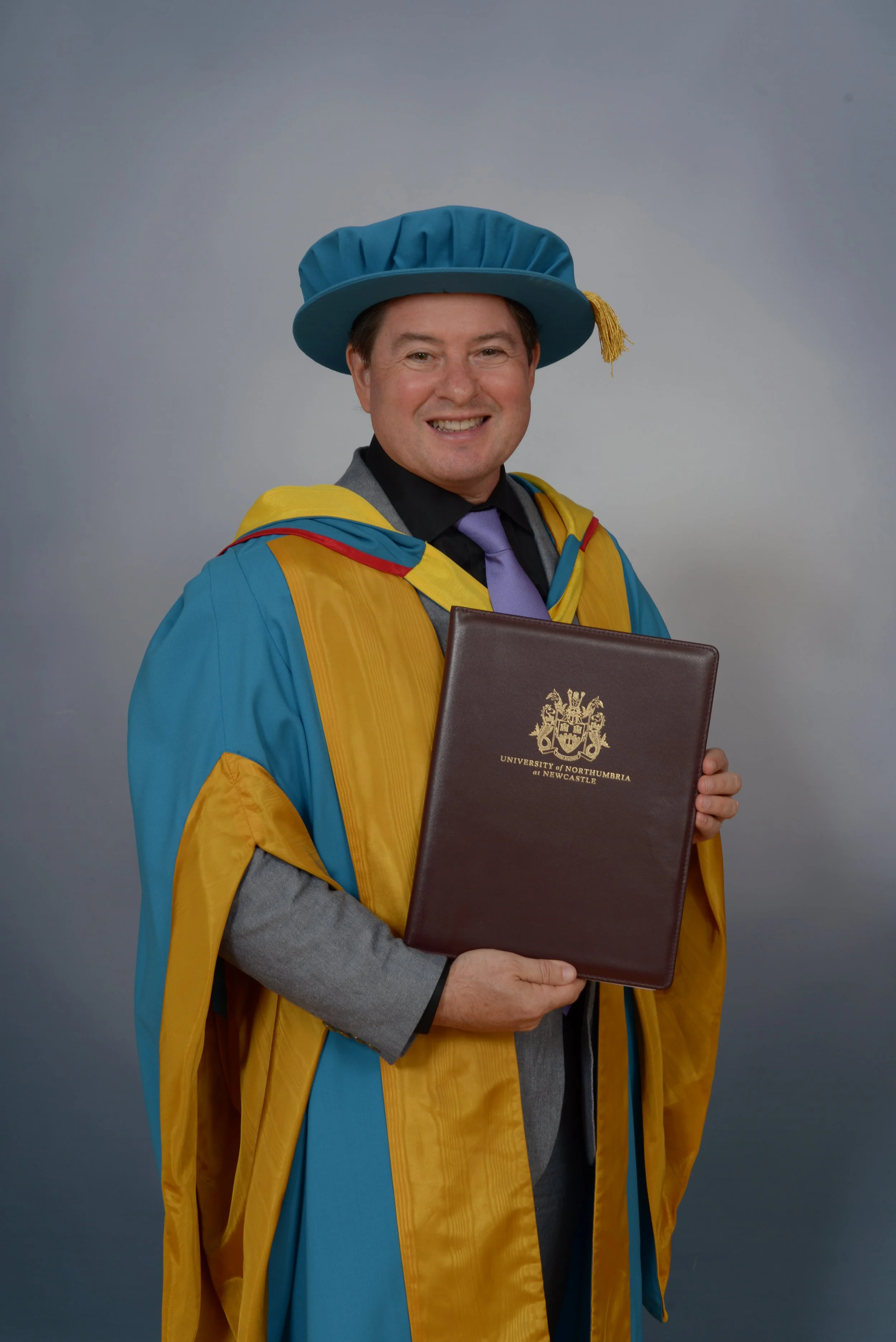
Thirty-seven years after Gibbs Hall, Northumbria handed me a doctorate. I still think the real degree was the one I earned the first time —
proof that struggle isn't a verdict on you, just a place you haven't found your footing yet.